service :
service :
mobile app design
mobile app design
timeline :
timeline :
mar 2020 - jun 2021
mar 2020 - jun 2021
user centered design
user centered design
team :
team :
EatClub.in being a fast-growing startup, I had a mixed bag of responsibilities, from the actual UX and UI to hiring to illustrations, to overseeing a complete rebrand, to even occasional front-end coding. At some points, I was the sole product designer, doing everything hands-on during major redesigns. By the end I was leading a team of 4. Below is a brief, assorted glimpse of some highlights from those years.
EatClub.in being a fast-growing startup, I had a mixed bag of responsibilities, from the actual UX and UI to hiring to illustrations, to overseeing a complete rebrand, to even occasional front-end coding. At some points, I was the sole product designer, doing everything hands-on during major redesigns. By the end I was leading a team of 4. Below is a brief, assorted glimpse of some highlights from those years.
role :
role :
Mojo Pizza : Engineering Cognitive Flow in Food Technology
Mojo Pizza : Engineering Cognitive Flow in Food Technology
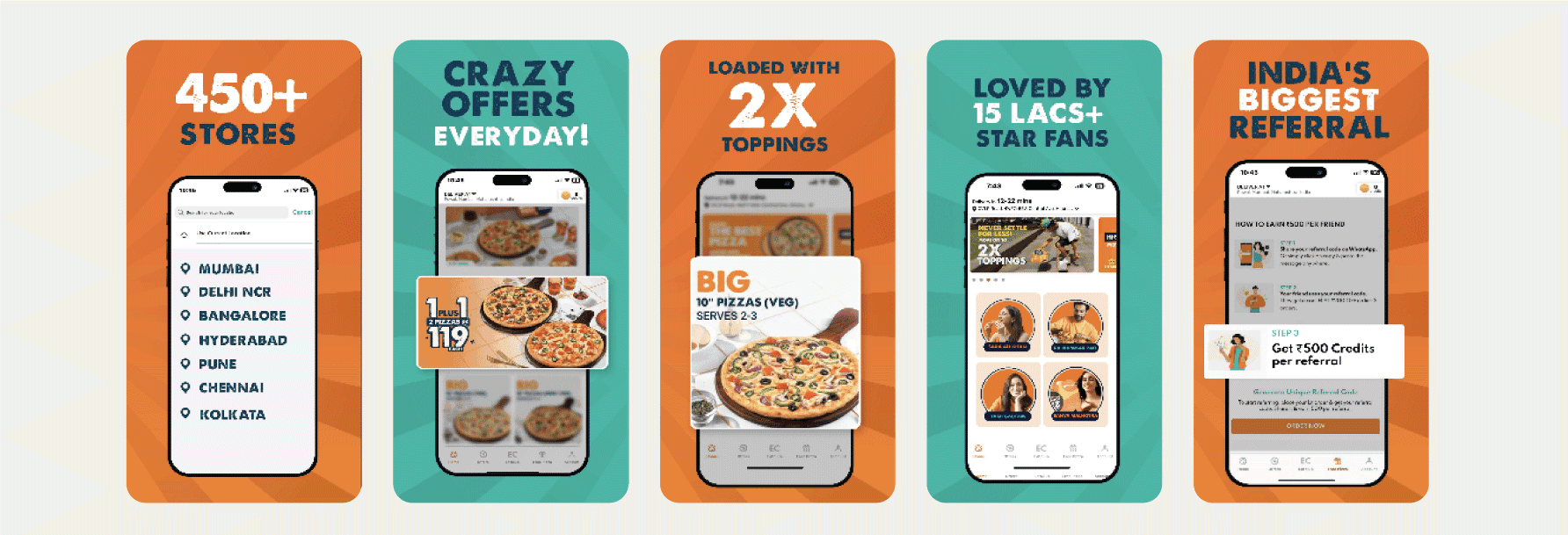
TASK 01: HMW Craft India’s First Half-and-Half Pizza Ordering Experience?
TASK 01: HMW Craft India’s First Half-and-Half Pizza Ordering Experience?
India’s food delivery market is crowded, but one feature was missing: half-and-half pizzas. While common in the West, no Indian app offered a seamless way to order them. Mojo Pizza saw this as a chance to stand out—and I was tasked with designing the country’s first half-and-half pizza ordering experience.
The Opportunity
The Opportunity

How do you give customers maximum flexibility without overwhelming them?
Complexity risk: Two halves, different flavours, bases, and add-ons could create confusion.
Behavior gap: Indian users had no prior digital experience with half-and-half ordering.
Business priority: Any friction at checkout could increase cart abandonment.
The Challenge
Led the end-to-end UX design of the half-and-half flow, from lo-fi wireframes to high-fidelity prototypes and final execution with developers. I also created the illustration system to make the process visual and intuitive.
This involved:
Creating user flows and lo-fi sketches.
Running design sprints with the product manager and developers.
Iterating based on usability testing feedback.
Delivering final design system components that could scale across flavors and sizes.
My Role
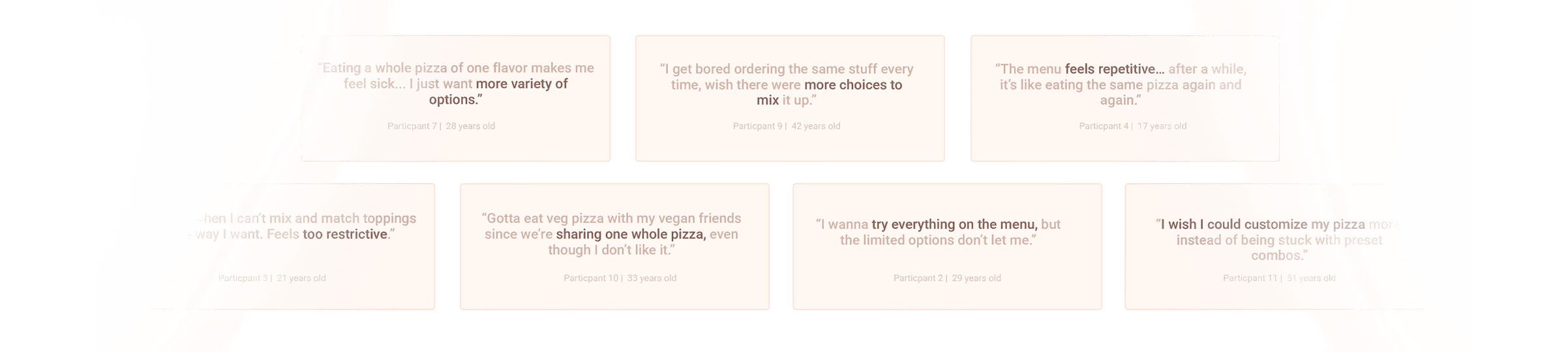
User insights: Hungry users dislike decision fatigue; the process had to feel playful, not work.
Market scan: Domino’s US offered the feature but was cluttered; Indian apps were simpler but lacked customization.
Key strategy: Use progressive disclosure—guide users step by step instead of overwhelming them.
Research & Strategy
Research & Strategy
Key insight: “Give control in small steps, not all at once.”
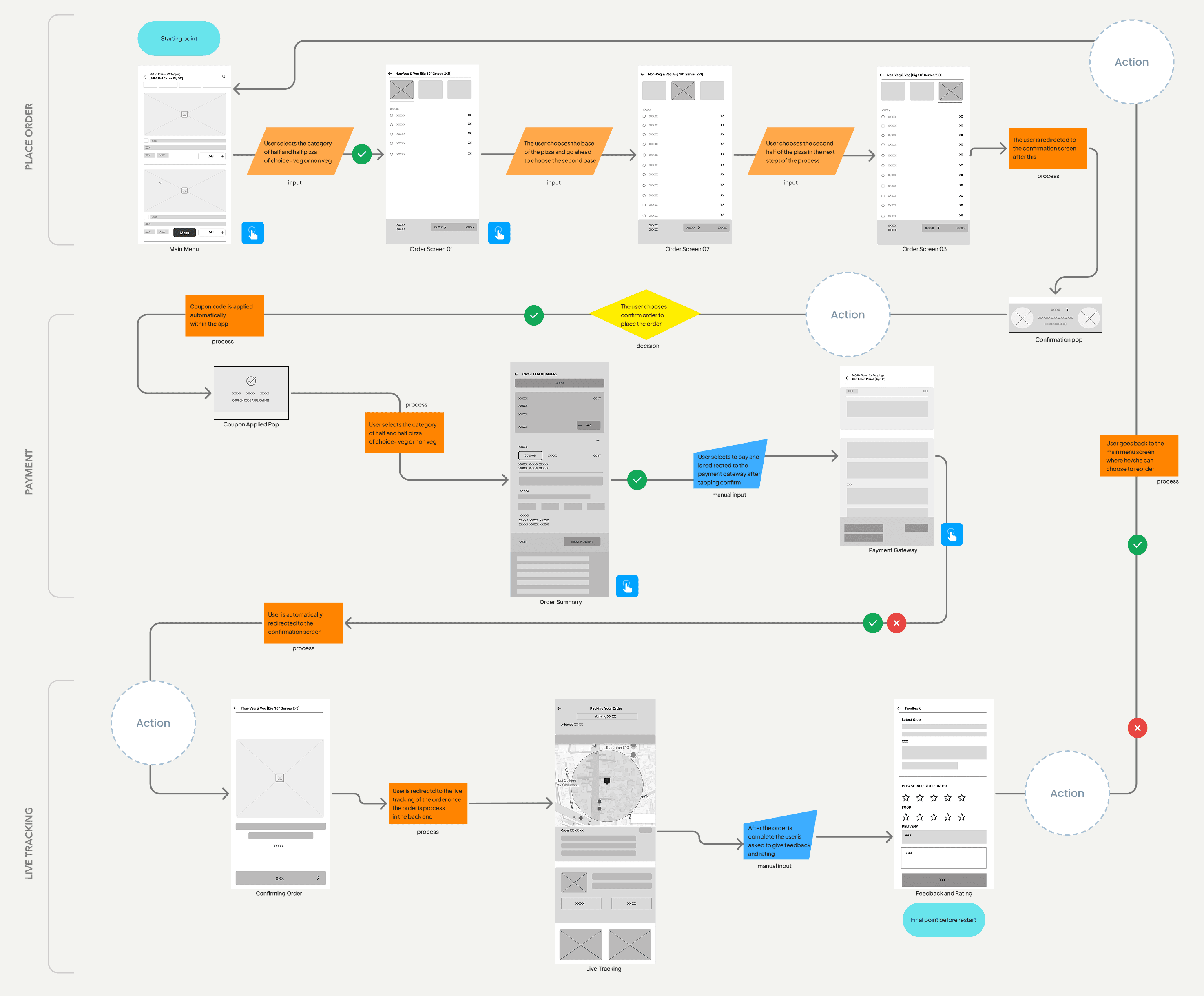
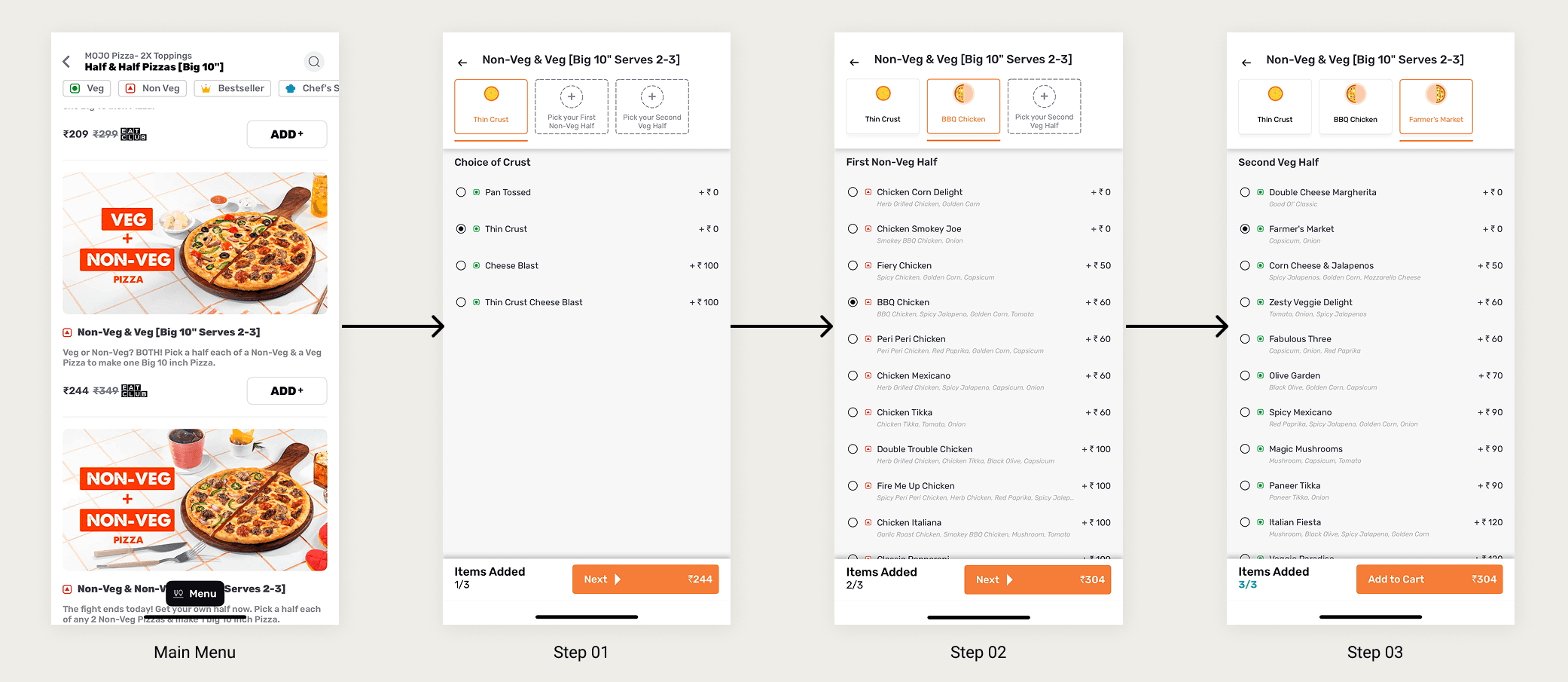
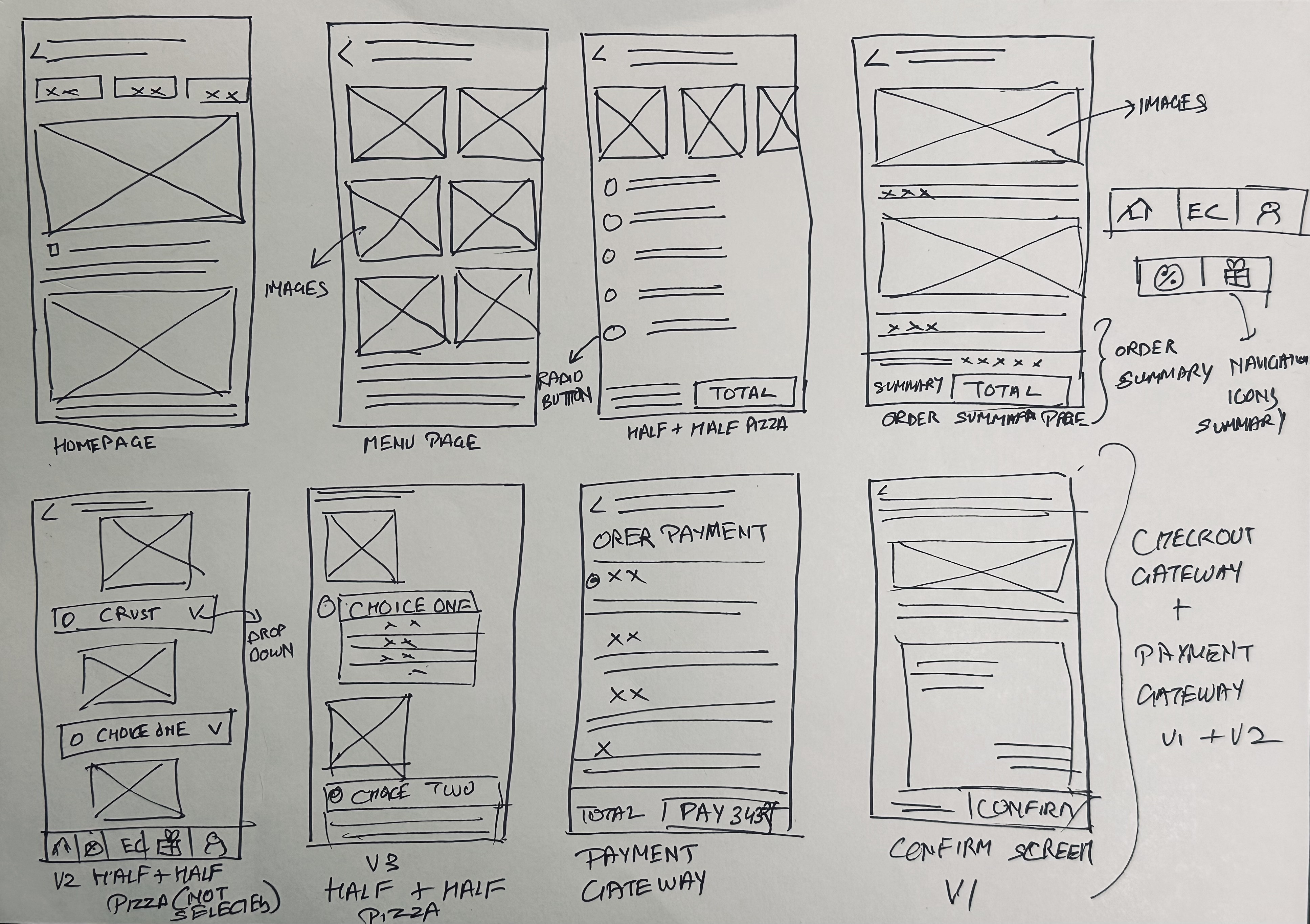
The journey was broken into clear, visual steps:
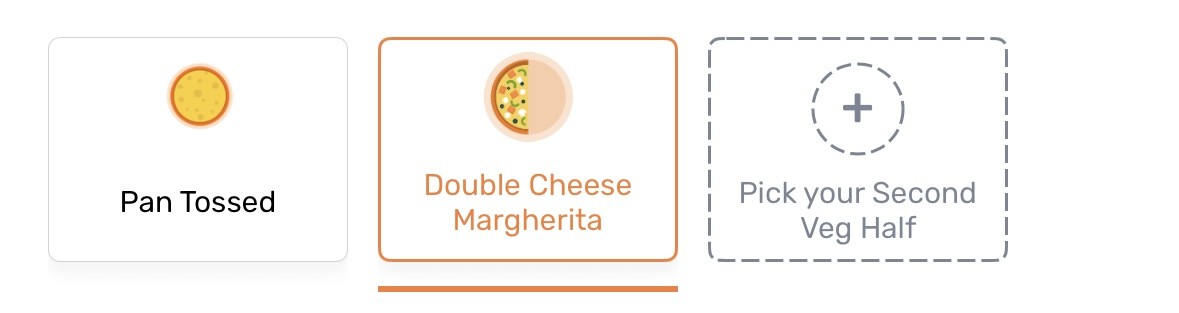
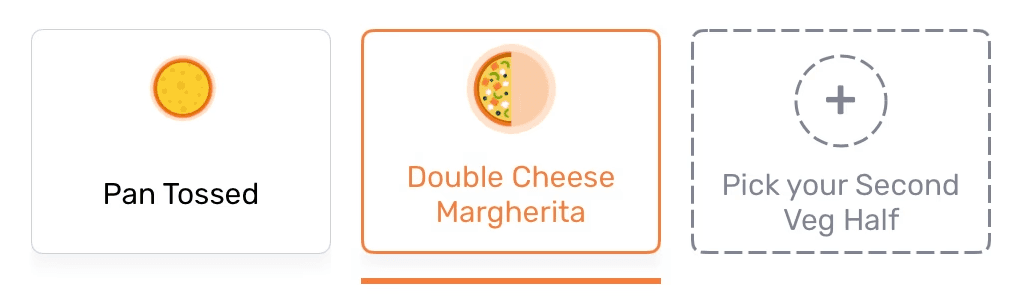
Pick Base – size and crust.
Choose First Half – simplified menu with illustrations.
Choose Second Half – mirrored view for balance.
Auto-Redirect to Checkout – minimizing taps.
Illustrations and subtle animations helped users “see” their pizza come to life, making the process both efficient and delightful.
Design Approach
Pizza Ordering Steps
Iterations & Feedback
Iterations & Feedback
Final Solution
Business differentiation: First Indian app with half-and-half ordering, positioned Mojo Pizza as an innovator.
User adoption: Early metrics showed 25% of new users tried half-and-half within launch month.
Reduced drop-offs: Checkout conversion improved compared to customizations in other flows.
Brand recall: Illustrations and delight elements strengthened brand personality.
This project taught me how to balance business innovation with user comfort. The biggest win was not just designing a new feature, but shaping a new mental model for Indian users around customization.
Reflection
Reflection
TASK 02: HMW We Bring Transparency to the Food Wait?
Turning Wait Time into Trust Time: Live Order Tracking at Mojo Pizza
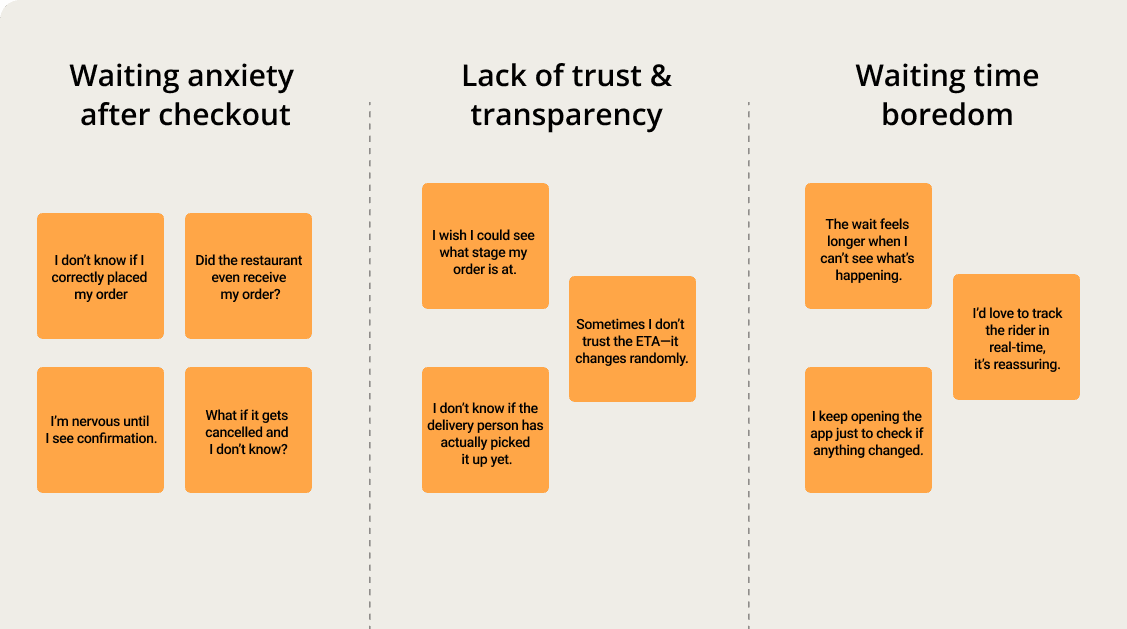
Everyone loves ordering pizza—but the real tension begins after payment. Customers sit staring at their phone, wondering: “Is my order confirmed? When will it arrive?” Anxiety replaces excitement.
I wanted to redesign this gap, turning uncertainty into a journey of trust and reassurance.
The Problem
Reassurance from the Start
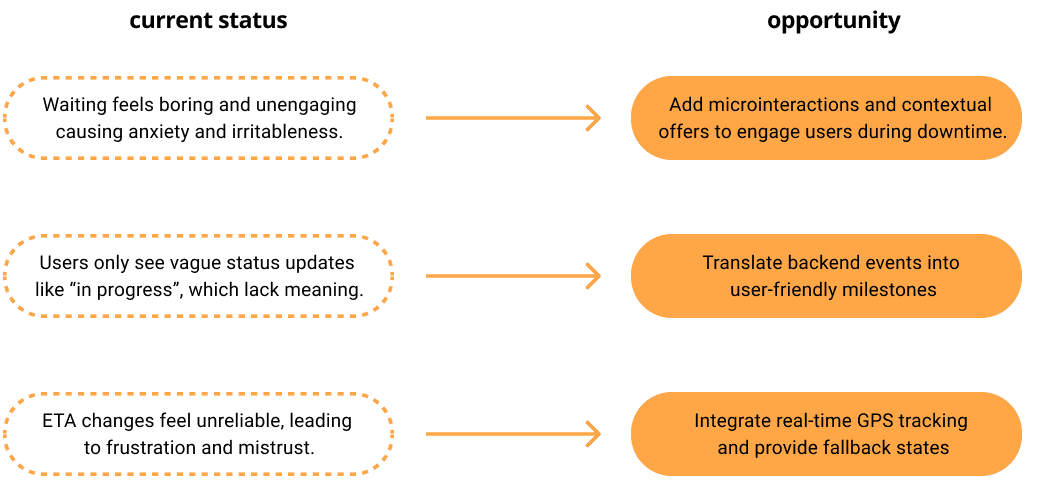
Next, I broke the process into small milestones: Preparing → Packing → On the Way. Each stage had an estimated time and a simple visual cue. Users didn’t have to wonder anymore; they could see progress in real time.
Making Progress Visible
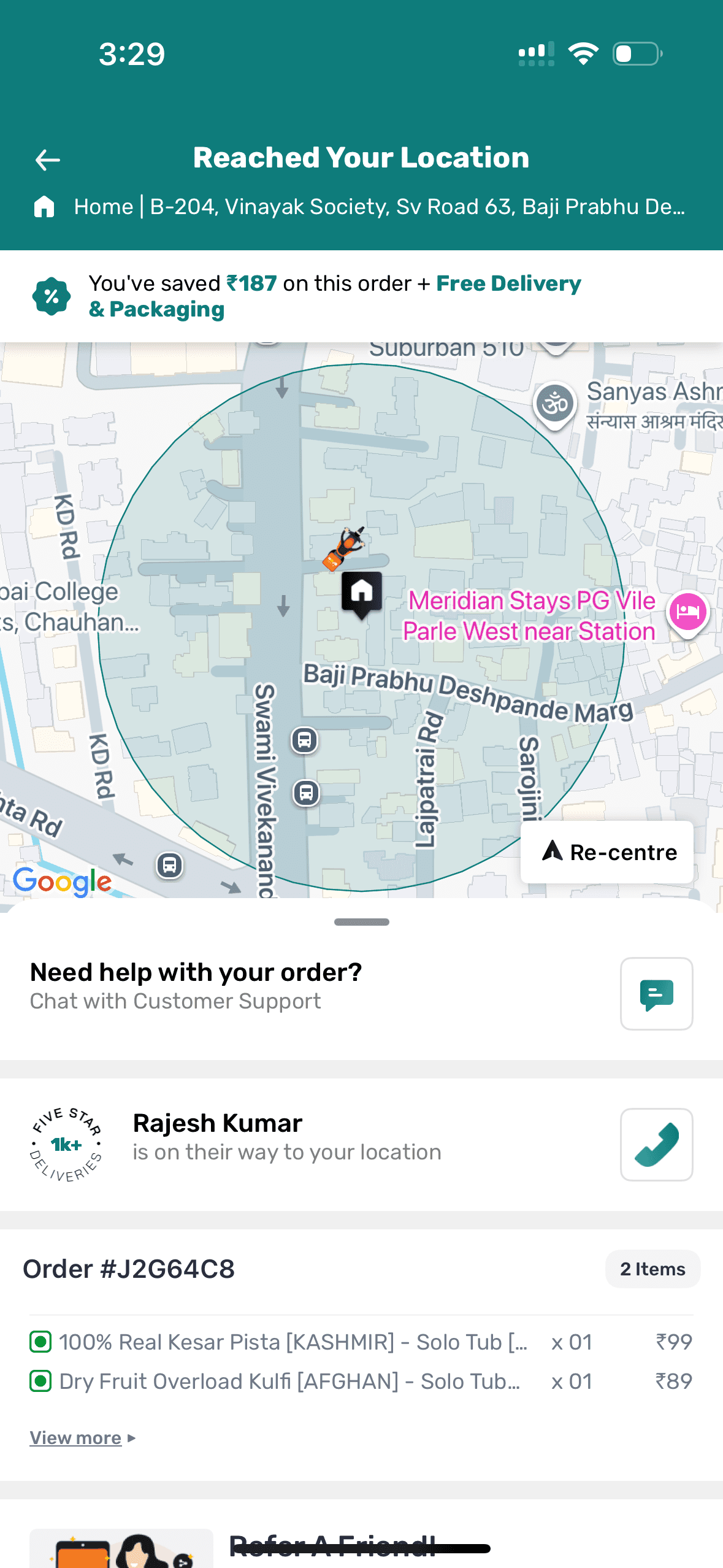
The centerpiece was the live map view. Partnering with developers, I integrated rider GPS to show real-time movement.
To handle India’s inconsistent internet, I designed fallback states like “Rider is near you” when GPS lagged—so users never felt in the dark.
The Magic of Live Tracking
As delivery neared, urgency cues like “Arriving in 3 mins” or “Rider is almost at your location” created anticipation. Small microinteractions—like a bouncing bike icon—added delight.
Building Anticipation
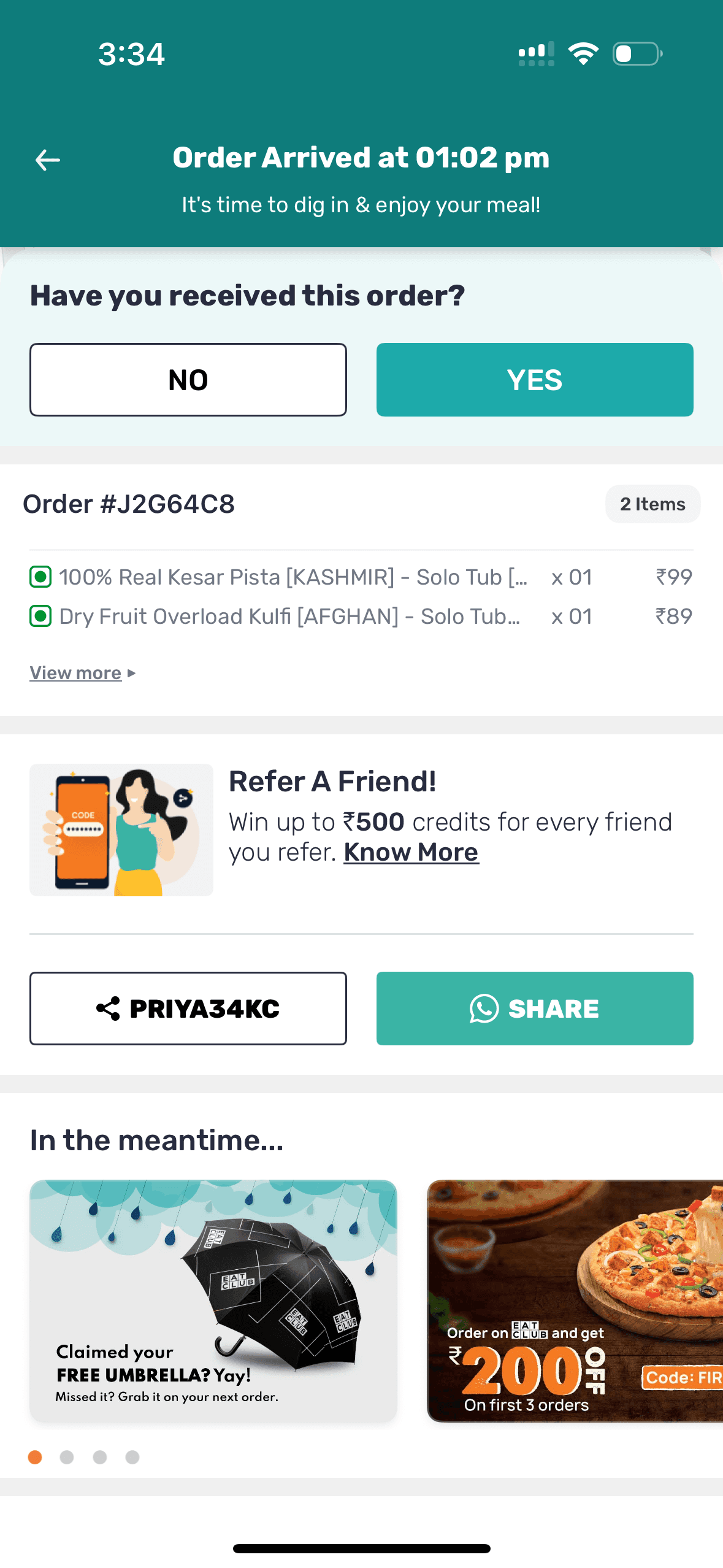
The final stage was just as important: celebration and feedback. When the pizza arrived, the screen switched to a warm success state, followed by a quick feedback form—star ratings and optional comments.
This closed the loop for users, while giving the business valuable data.
Closing the Loop
I designed a transparent live tracking flow for Mojo Pizza that eased user anxiety, built confidence, and reduced support calls.
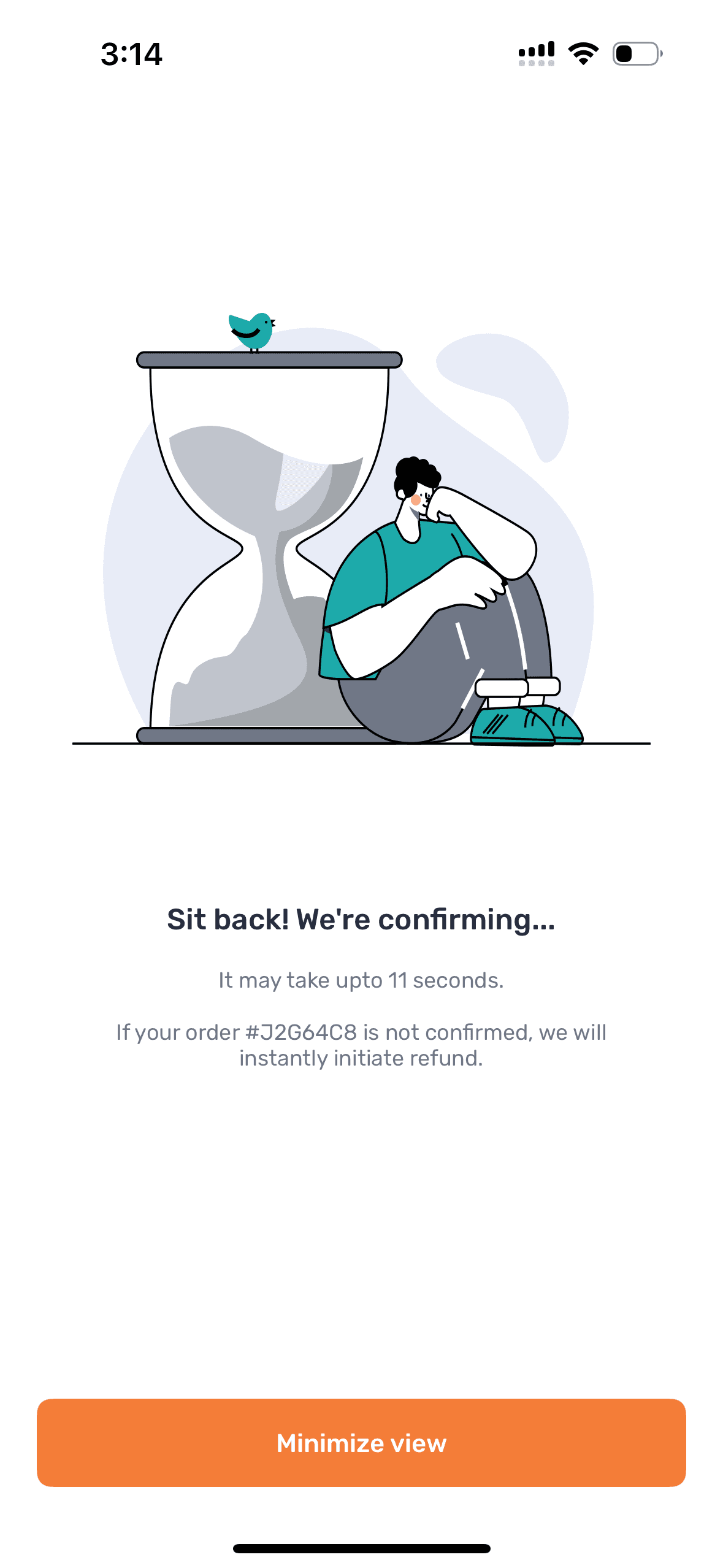
The first screen I designed was the confirmation screen. Instead of a dry “Order placed,” I introduced a friendly illustration, clear copy (“Sit back, we’re confirming”), and a refund guarantee message. This set the tone—users felt secure right after checkout.
The Impact
TASK 03: HMW We Design Delight with Microinteractions?
Ordering pizza is an emotional rollercoaster: excitement, impatience, relief. My job? Make every step feel reassuring and a little bit fun. I designed a series of microinteractions that turned routine clicks into memorable moments.
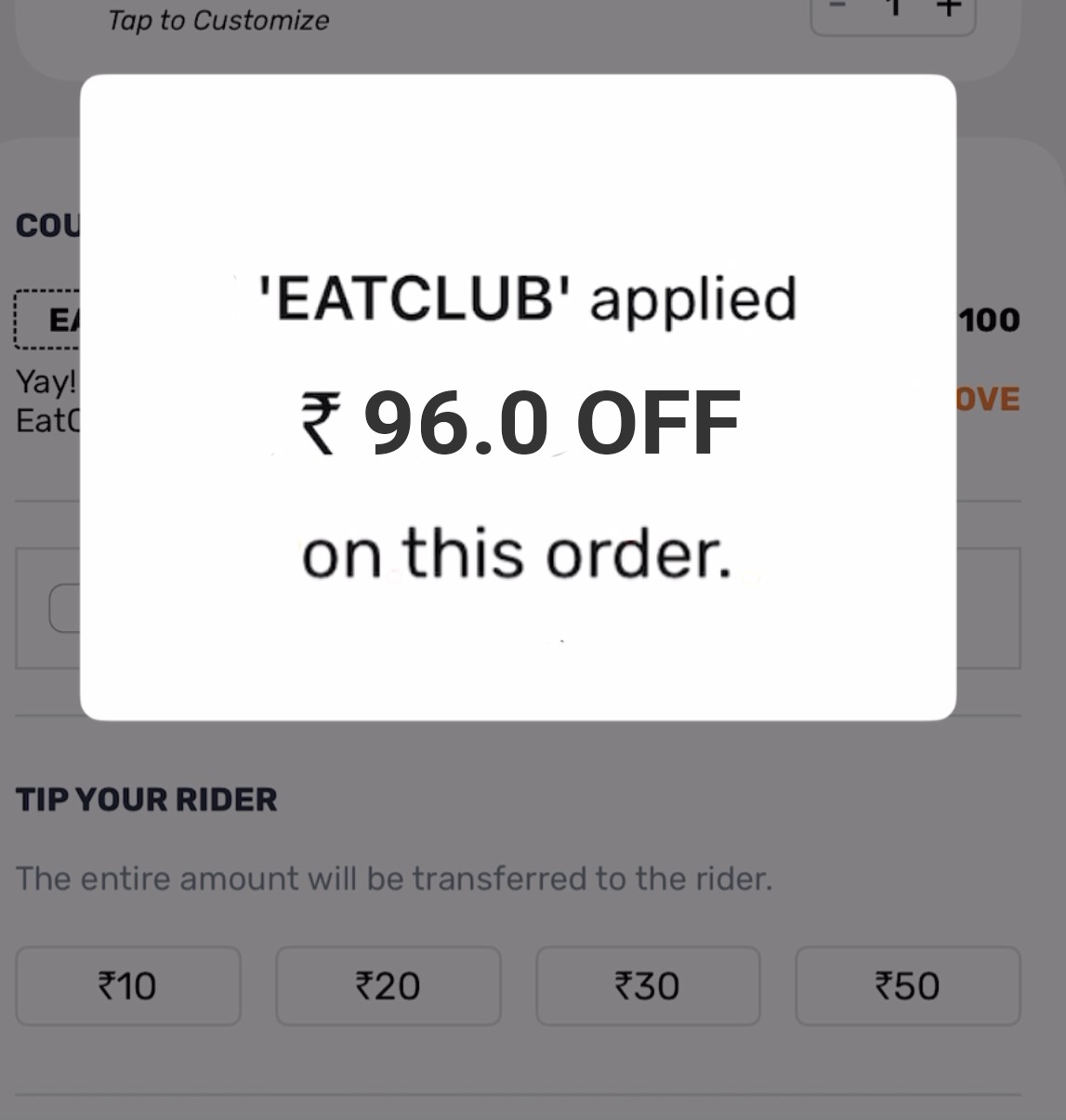
01 Coupon Applied
Opportunity: Users often doubt if their coupon was applied correctly. This uncertainty leads to frustration at checkout.
My Design response: I created a celebratory animation with refined UX writing paired with a confirmation message to instantly reassure users their savings were locked in. The microinteraction reinforced value while reducing cart abandonment.
02 Order Placed
User problem: Post-payment anxiety—“Did my order go through?”
My Design response: I designed a celebratory delivery animation that acknowledged the event with delight. This positive reinforcement closed the loop and increased the likelihood of users leaving feedback or reordering.
03 Order Delivered
User problem: Delivery completion used to feel like a dead-end message.
My Design response: I introduced a bold confirmation animation with brand colors and motion feedback. It shifted users from uncertainty to excitement, making order placement feel like a milestone instead of a waiting period.
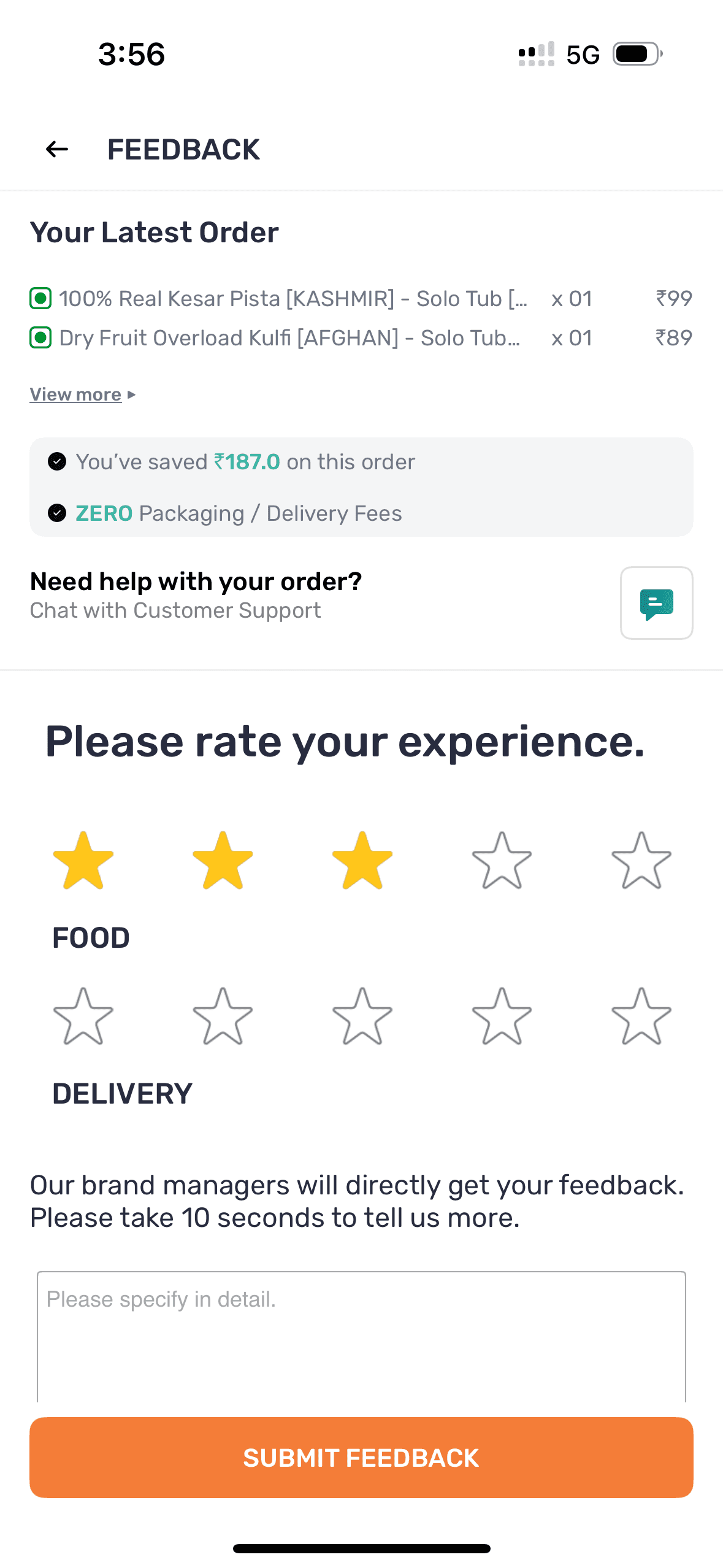
04 Rate Order
User problem: Feedback forms often feel like chores, leading to low completion.
My Design response: I crafted a lightweight, animated rating prompt that appeared immediately after delivery. By making the interaction quick and rewarding, more users shared feedback while the experience was fresh.
Before (Static)
After (Dynamic)
→

User Says
User Says
User Says
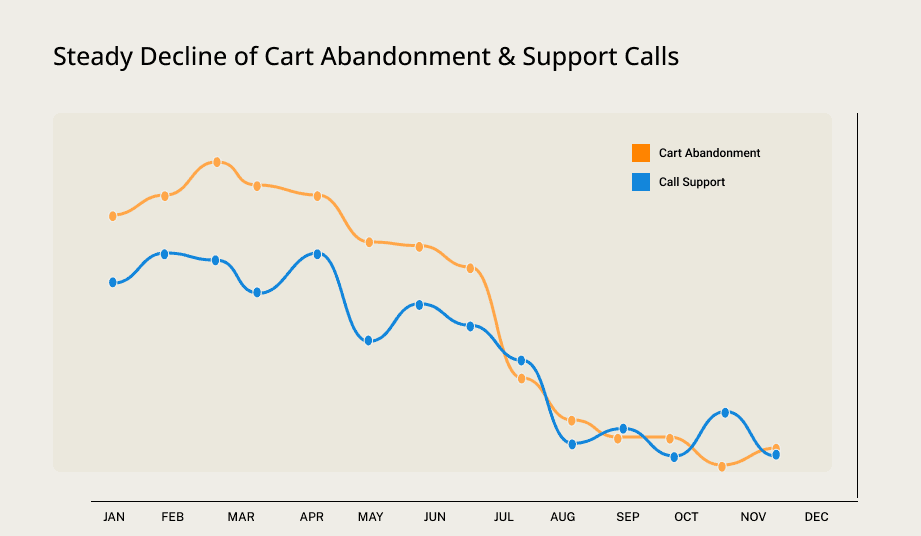
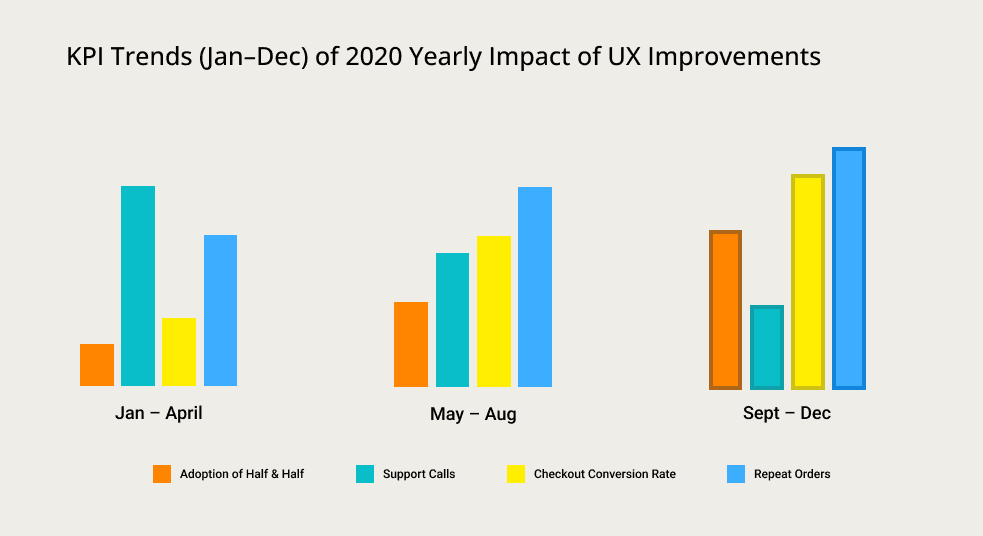
The redesigned tracking wasn’t just about pretty screens. It reduced support calls (“Where’s my order?”), built user trust, and kept people engaged during the wait. Most importantly, it transformed a stressful gap into a transparent and enjoyable experience.



User Says
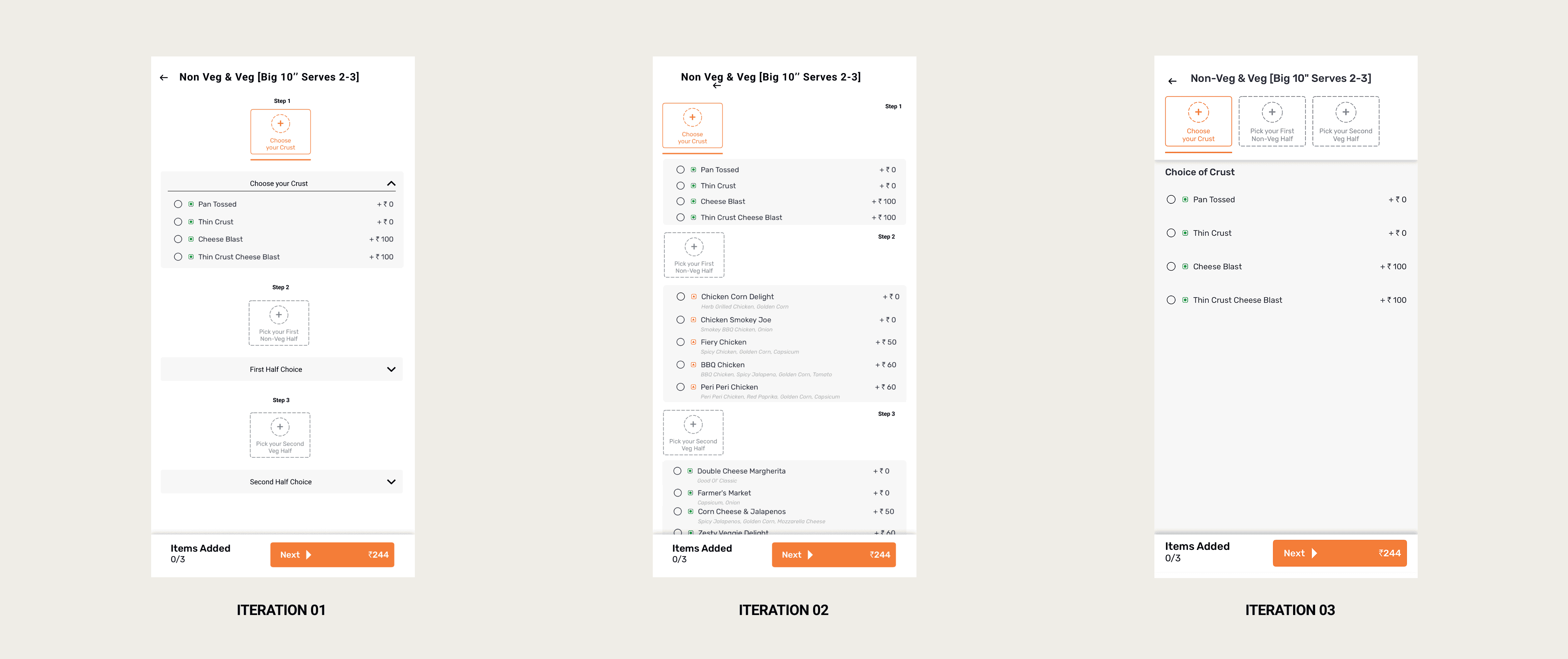
Over 7+ iterations were made, usability tests guided refinements:
Designing for Mojo Pizza meant reimagining the entire pizza journey—from India’s first half-and-half ordering flow, to transparent live order tracking, to delightful microinteractions that made every click reassuring. Through design sprints, usability testing, and countless iterations, I transformed moments of anxiety into moments of trust and delight. This project not only solved real user pain points but also positioned Mojo Pizza as an innovator in a highly competitive food delivery market.
As a UX designer, I wasn’t just solving a UI challenge—I was bridging cultural expectations, market gaps, and user psychology into a coherent, scalable solution.
Click To Jump To
Click To Jump To
The final design was:
Step-based, visual, intuitive.
Custom illustrations for bases and halves.
Auto-checkout transition, reducing decision fatigue.
Mobile-first, tested across low-end Android phones.

Overview
Quick Links
Quick Links


The Opportunity
Tap to Jump On
Quick Links
TASK 01: HMW Craft India’s First Half-and-Half Pizza Ordering Experience?
How do you give customers maximum flexibility without overwhelming them?
Complexity risk: Two halves, different flavours, bases, and add-ons could create confusion.
Behavior gap: Indian users had no prior digital experience with half-and-half ordering.
Business priority: Any friction at checkout could increase cart abandonment.
The Challenge
How do you give customers maximum flexibility without overwhelming them?
Complexity risk: Two halves, different flavours, bases, and add-ons could create confusion.
Behavior gap: Indian users had no prior digital experience with half-and-half ordering.
Business priority: Any friction at checkout could increase cart abandonment.
My Role
Led the end-to-end UX design of the half-and-half flow, from lo-fi wireframes to high-fidelity prototypes and final execution with developers. I also created the illustration system to make the process visual and intuitive.
This involved:
Creating user flows and lo-fi sketches.
Running design sprints with the product manager and developers.
Iterating based on usability testing feedback.
Delivering final design system components that could scale across sizes.
Research & Strategy
User insights: Hungry users dislike decision fatigue; the process had to feel playful, not work.
Market scan: Domino’s US offered the feature but was cluttered; Indian apps were simpler but lacked customization.
Key strategy: Use progressive disclosure—guide users step by step instead of overwhelming them.
Key insight: “Give control in small steps, not all at once.”
The journey was broken into clear, visual steps:
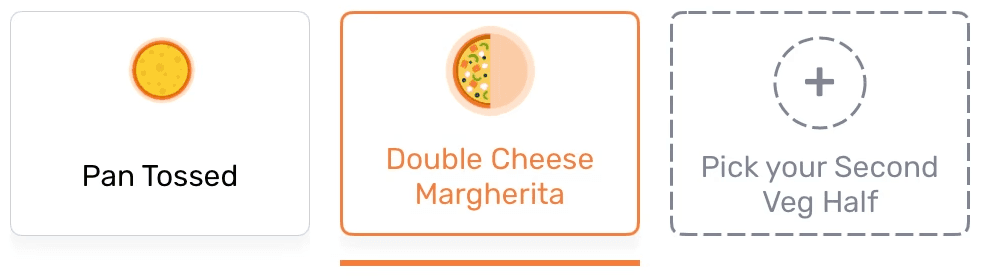
Pick Base – size and crust.
Choose First Half – simplified menu with illustrations.
Choose Second Half – mirrored view for balance.
Auto-Redirect to Checkout – minimizing taps.
Illustrations and subtle animations helped users “see” their pizza come to life, making the process both efficient and delightful.
Iterations & Feedback
Over 7+ iterations were made, usability tests guided refinements:
As a UX designer, I wasn’t just solving a UI challenge—I was bridging cultural expectations, market gaps, and user psychology into a coherent, scalable solution.
The final design was:
Step-based, visual, intuitive.
Custom illustrations for bases and halves.
Auto-checkout transition, reducing decision fatigue.
Mobile-first, tested across low-end Android phones.
Impact
Business differentiation: First Indian app with half-and-half ordering, positioned Mojo Pizza as an innovator.
User adoption: Early metrics showed 25% of new users tried half-and-half within launch month.
Reduced drop-offs: Checkout conversion improved compared to customizations in other flows.
Brand recall: Illustrations and delight elements strengthened brand personality.
TASK 02: HMW We Bring Transparency to the Food Wait?
Turning Wait Time into Trust Time: Live Order Tracking at Mojo Pizza
The Problem
Everyone loves ordering pizza—but the real tension begins after payment. Customers sit staring at their phone, wondering: “Is my order confirmed? When will it arrive?”
Anxiety replaces excitement.
I wanted to redesign this gap, turning uncertainty into a journey of trust and reassurance.
Reflection
This project taught me how to balance business innovation with user comfort. The biggest win was not just designing a new feature, but shaping a new mental model for Indian users around customization.
Pizza Ordering Steps
Reassurance from the Start
The first screen I designed was the confirmation screen. Instead of a dry “Order placed,” I introduced a friendly illustration, clear copy (“Sit back, we’re confirming”), and a refund guarantee message. This set the tone—users felt secure right after checkout.

Making Progress Visible
Next, I broke the process into small milestones: Preparing → Packing → On the Way. Each stage had an estimated time and a simple visual cue. Users didn’t have to wonder anymore; they could see progress in real time.
The Magic of Live Tracking
The centerpiece was the live map view. Partnering with developers, I integrated rider GPS to show real-time movement. I kept the interface clean, prioritizing the map over promotions.
To handle India’s inconsistent internet, I designed fallback states like “Rider is near you” when GPS lagged—so users never felt in the dark.
As delivery neared, urgency cues like “Arriving in 3 mins” or “Rider is almost at your location” created anticipation. Small microinteractions—like a bouncing bike icon—added delight.
The final stage was just as important: celebration and feedback. When the pizza arrived, the screen switched to a warm success state, followed by a quick feedback form—star ratings and optional comments.
This closed the loop for users, while giving the business valuable data.
Building Anticipation
Closing the Loop
TASK 03: HMW We Design Delight with Microinteractions?
Ordering pizza is an emotional rollercoaster: excitement, impatience, relief. My job? Make every step feel reassuring and a little bit fun. I designed a series of microinteractions that turned routine clicks into memorable moments.
01 Coupon Applied
User Says
Opportunity: Users often doubt if their coupon was applied correctly. This uncertainty leads to frustration at checkout.
My Design response: I created a celebratory animation with refined UX writing paired with a confirmation message to instantly reassure users their savings were locked in. The microinteraction reinforced value while reducing cart abandonment.
Before (Static)
After (Dynamic)
03 Order Delivered
User Says
02 Order Placed
User problem: Post-payment anxiety—“Did my order go through?”
Design response: I introduced a bold confirmation animation with brand colors and motion feedback. It shifted users from uncertainty to excitement, making order placement feel like a milestone instead of a waiting period.
User Says
User problem: Delivery completion used to feel like a dead-end message.
Design response: I designed a celebratory delivery animation that acknowledged the event with delight. This positive reinforcement closed the loop and increased the likelihood of users leaving feedback or reordering.
The Impact
04 Rate Order
User problem: Feedback forms often feel like chores, leading to low completion.
Design response: I crafted a lightweight, animated rating prompt that appeared immediately after delivery. By making the interaction quick and rewarding, more users shared feedback while the experience was fresh.
User Says
Overview
Designing for Mojo Pizza meant reimagining the entire pizza journey—from India’s first half-and-half ordering flow, to transparent live order tracking, to delightful microinteractions that made every click reassuring. Through design sprints, usability testing, and countless iterations, I transformed moments of anxiety into moments of trust and delight. This project not only solved real user pain points but also positioned Mojo Pizza as an innovator in a highly competitive food delivery market.
service :
mobile app design
timeline :
Mojo Pizza : Engineering Cognitive
Flow in Food Technology
role :
EatClub.in being a fast-growing startup, I had a mixed bag of responsibilities, from the actual UX and UI to hiring to illustrations, to overseeing a complete rebrand, to even occasional front-end coding. At some points, I was the sole product designer, doing everything hands-on during major redesigns. By the end I was leading a team of 4. Below is a brief, assorted glimpse of some highlights from those years.
team :
user centered design
mar 2020 - jun 2021
The redesigned tracking wasn’t just about pretty screens. It reduced support calls (“Where’s my order?”), built user trust, and kept people engaged during the wait. Most importantly, it transformed a stressful gap into a transparent and enjoyable experience.
Overview
Designing for Mojo Pizza meant reimagining the entire pizza journey—from India’s first half-and-half ordering flow, to transparent live order tracking, to delightful microinteractions that made every click reassuring. Through design sprints, usability testing, and countless iterations, I transformed moments of anxiety into moments of trust and delight. This project not only solved real user pain points but also positioned Mojo Pizza as an innovator in a highly competitive food delivery market.
The Challenge
How do you give customers maximum flexibility without overwhelming them?
Complexity risk: Two halves, different flavours, bases, and add-ons could create confusion.
Behavior gap: Indian users had no prior digital experience with half-and-half ordering.
Business priority: Any friction at checkout could increase cart abandonment.
Led the end-to-end UX design of the half-and-half flow, from lo-fi wireframes to high-fidelity prototypes and final execution with developers. I also created the illustration system to make the process visual and intuitive.
This involved:
Creating user flows and lo-fi sketches.
Running design sprints with the product manager and developers.
Iterating based on usability testing feedback.
Delivering final design system components that could scale across flavors and sizes.
My Role
Designed a transparent live tracking flow for Mojo Pizza that eased user anxiety, built confidence, and reduced support calls.
Design Approach
Pizza Ordering Steps
The journey was broken into clear, visual steps:
Pick Base – size and crust.
Choose First Half – simplified menu with illustrations.
Choose Second Half – mirrored view for balance.
Auto-Redirect to Checkout – minimizing taps.
Illustrations and subtle animations helped users “see” their pizza come to life, making the process both efficient and delightful.
Over 7+ iterations were made, usability tests guided refinements:
Final Steps
Final Steps
Final Solution
Impact

Key insight: “Give control in small steps, not all at once.”
User insights: Hungry users dislike decision fatigue; the process had to feel playful, not work.
Market scan: Domino’s US offered the feature but was cluttered; Indian apps were simpler but lacked customization.
Key strategy: Use progressive disclosure—guide users step by step instead of overwhelming them.
The final design was:
Step-based, visual, intuitive.
Custom illustrations for bases and halves.
Auto-checkout transition, reducing decision fatigue.
Mobile-first, tested across low-end Android phones.
This project taught me how to balance business innovation with user comfort. The biggest win was not just designing a new feature, but shaping a new mental model for Indian users around customization.
TASK 02: HMW We Bring Transparency to the Food Wait?
Everyone loves ordering pizza—but the real tension begins after payment. Customers sit staring at their phone, wondering: “Is my order confirmed? When will it arrive?” Anxiety replaces excitement.
I wanted to redesign this gap, turning uncertainty into a journey of trust and reassurance.
The Problem
Reassurance from the Start
Next, I broke the process into small milestones: Preparing → Packing → On the Way. Each stage had an estimated time and a simple visual cue. Users didn’t have to wonder anymore; they could see progress in real time.
Making Progress Visible
The Magic of Live Tracking
As delivery neared, urgency cues like “Arriving in 3 mins” or “Rider is almost at your location” created anticipation. Small microinteractions—like a bouncing bike icon—added delight.
Building Anticipation
The final stage was just as important: celebration and feedback. When the pizza arrived, the screen switched to a warm success state, followed by a quick feedback form—star ratings and optional comments.
This closed the loop for users, while giving the business valuable data.
Closing the Loop
Designed a transparent live tracking flow for Mojo Pizza that eased user anxiety, built confidence, and reduced support calls.
The first screen I designed was the confirmation screen. Instead of a dry “Order placed,” I introduced a friendly illustration, clear copy (“Sit back, we’re confirming”), and a refund guarantee message. This set the tone—users felt secure right after checkout.
The centerpiece was the live map view. Partnering with developers, I integrated rider GPS to show real-time movement. I kept the interface clean, prioritizing the map over promotions.
To handle India’s inconsistent internet, I designed fallback states like “Rider is near you” when GPS lagged—so users never felt in the dark.
Turning Wait Time into Trust Time: Live Order Tracking at Mojo Pizza
The Impact
TASK 03: HMW We Design Delight with Microinteractions?
Ordering pizza is an emotional rollercoaster: excitement, impatience, relief. My job? Make every step feel reassuring and a little bit fun. I designed a series of microinteractions that turned routine clicks into memorable moments.
01 Coupon Applied
Opportunity: Users often doubt if their coupon was applied correctly. This uncertainty leads to frustration at checkout.
My Design response: I created a celebratory animation with refined UX writing paired with a confirmation message to instantly reassure users their savings were locked in. The microinteraction reinforced value while reducing cart abandonment.
02 Order Placed
User problem: Post-payment anxiety—“Did my order go through?”
Design response: I introduced a bold confirmation animation with brand colors and motion feedback. It shifted users from uncertainty to excitement, making order placement feel like a milestone instead of a waiting period.
03 Order Delivered
User problem: Delivery completion used to feel like a dead-end message.
Design response: I designed a celebratory delivery animation that acknowledged the event with delight. This positive reinforcement closed the loop and increased the likelihood of users leaving feedback or reordering.
04 Rate Order
User problem: Feedback forms often feel like chores, leading to low completion.
Design response: I crafted a lightweight, animated rating prompt that appeared immediately after delivery. By making the interaction quick and rewarding, more users shared feedback while the experience was fresh.
Before (Static)
After (Dynamic)
→
User Says
User Says
User Says
The redesigned tracking wasn’t just about pretty screens. It reduced support calls (“Where’s my order?”), built user trust, and kept people engaged during the wait. Most importantly, it transformed a stressful gap into a transparent and enjoyable experience.
User Says
